
"There is a growing desire among Indians to be associated with international celebrations and, indirectly, to build a visible presence on the global stage." Chef Maxime – Café Monique
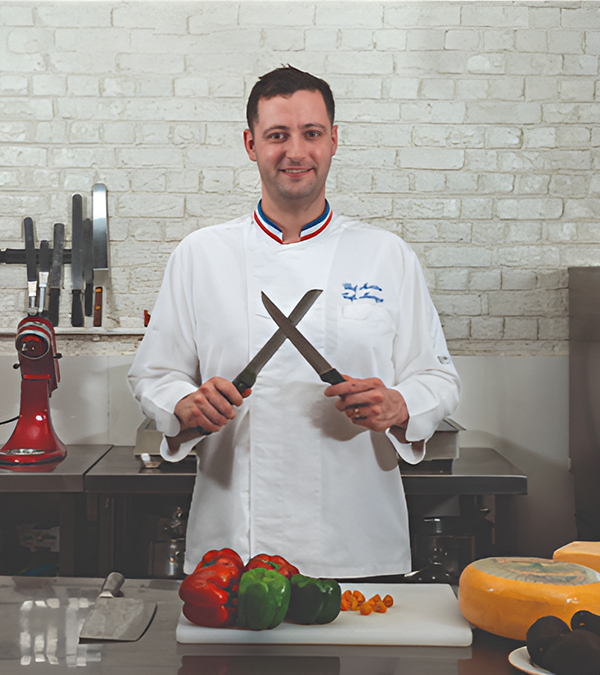
Co-founder and Chef of Café Monique
In this profile, we meet Chef Maxime Montay of Café Monique, whose success has continued to grow over the past five years, including the launch of an online business during the height of the COVID-19 crisis.
He explains how the unique and rapidly evolving Indian market calls for informed and well-supported decision-making. The trajectory of Café Monique, a thriving example of India’s hospitality sector, illustrates this Indian aspiration to be seen and heard, including on the international stage
My name is Maxime Montay. I am French, 33 years old. I come from Reims, in the Champagne-Ardenne region. I arrived in India in early 2017 and began my professional journey there as an employee of Soufflet (now InVivo), where I worked from 2017 to 2021.
I am an industrial process engineer, although not specifically in the food industry. Thanks to a short internship in Mumbai in 2015 during my studies, I joined this agrifood company. My experience in Mumbai played in my favor during the recruitment process because I was already familiar with India.
I worked for Soufflet for two years as a VIE and then for two and a half years as an expatriate employee in the barley division. We sourced Indian barley from Rajasthan and transformed it into malt at a plant located in Alwar, where I personally lived for two years. Once processed, the malt was sold to our brewing clients (who represented 90% of our customer base) as well as distillers.
During COVID-19 in 2020, India’s alcoholic beverage industry – particularly beer and whisky – was severely disrupted because alcohol sales were suspended for three to six months. As a result, our company shut down operations for several months, meaning there was no production. The business suffered, and restarting operations took time.
Consequently, I found myself with a great deal of free time and reconnected with my passion for pastry. This passion is both personal and familial, as my family owns an artisanal bakery and pastry shop. Every year, we would gather there, especially during the holiday season, to work together. I grew up in that environment.
At the time I was rediscovering this passion, I met Shivan in March 2020. He is both my business partner and life partner. He encouraged me to fully pursue my passion, and together we launched the Monique venture. We officially opened Monique on April 24, 2021, initially as an online business, right in the middle of the Delta COVID wave – a particularly stressful period in our lives. Shortly afterward, another lockdown was imposed.
We started in a kitch en with just three people: a chef – myself – a housekeeping staff member, and a delivery driver. From 2021 until December 2023, Café Monique operated primarily online.
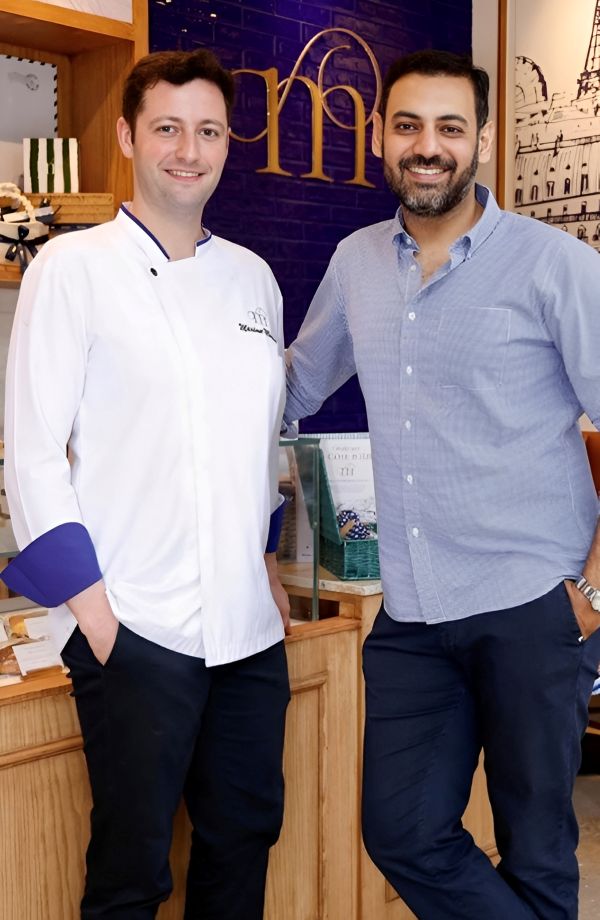
Our production laboratory was operational from the day we started and was initially built to support our online sales. After two years online, we opened our first café and tearoom in New Friends Colony (Delhi) in December 2023, which remains our flagship location today.
In 2024, we opened a second, slightly smaller café in the Khan Market (Delhi) extension area. Finally, in June 2025, we opened our third café in Gurgaon (Haryana), within a newly developed business complex that is well located and home to numerous restaurants. Customer response has been very positive, and footfall continues to grow each month.
In New Delhi, customers tend to be very loyal to their restaurant choices, making it difficult to attract them to new concepts. Gurgaon, by contrast, is a more dynamic market, with a larger population of young professionals eager to try new places.
There are also behavioural differences between Indian customers and expatriates. Expatriates tend to visit early in the morning, whereas Indian customers are more likely to arrive later in the morning.
We still maintain online sales through our website, even though the core of our business has shifted to our cafés. Most customers now prefer ordering directly at our locations. Nevertheless, we continue to support both channels, as part of our customers still enjoy having products delivered.
I already had a foundation of knowledge thanks to my family background. However, during COVID, I had more time to follow online training courses and update my skills. The profession had evolved significantly since my earlier exposure to it, especially in pastry-making. Customers increasingly seek lighter, less sweet pastries.
Today, I would like to further develop my expertise in savory cuisine. We have introduced a savory range at Monique, and I would like to expand it further while staying as close as possible to the flavors and ingredients that define French cuisine, which we proudly showcase.
Our strategy is to remain as authentic as possible in recreating a French experience.
When we launched, it was during COVID. People could not travel. At the time, customers frequently tagged us on social media with phrases such as “Little taste of France” to describe the feeling our pastries evoked. That is exactly the feeling we aim to create.
As of today, this desire for authenticity remains strong, but many Indians have resumed international travel. As a result, we are now focused on building a community around Monique and developing a loyal customer base. We are a niche café concept that we continue to grow. There is also an aspirational element among Indians who may not necessarily be able to travel to France. By visiting Monique, they can experience a taste of France.
From a positioning standpoint, we want Monique to remain artisanal while continuing to grow. At present, we have no plans for major horizontal expansion through additional cafés. Instead, we are focusing on specialization and the creation of experiences.
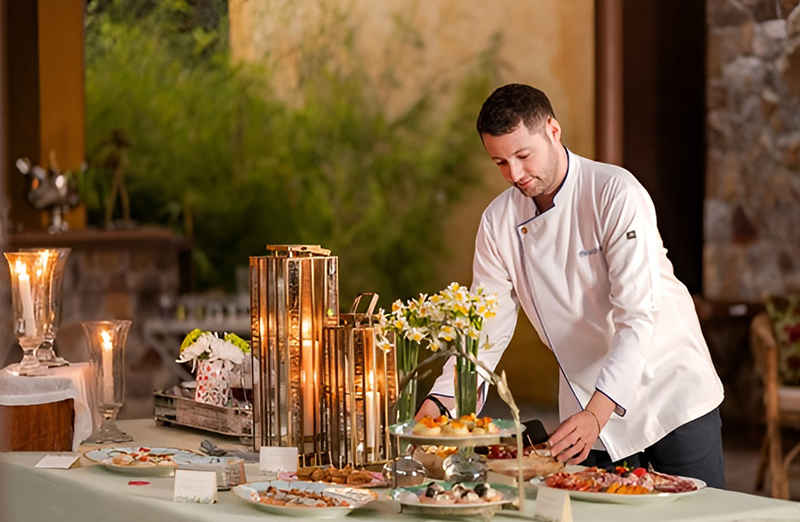
This includes catering services, such as cocktail receptions, corporate events, and canapé offerings. We entered this segment about a year ago and have since established a strong presence in the catering market, which we intend to expand further.
For example, we have already worked with French brands on professional events because they value authenticity, which is a core principle of Monique. For these types of services, clients seek tailor-made solutions. Our role is to partner with them as their food and beverage provider and contribute to the success of their projects.
Another key pillar of our business development strategy is gift boxes for Diwali and Christmas. Over Café Monique’s five years of existence, most of the gift-related revenue came from Diwali (approximately 70%) and Christmas, with the remainder generated by other celebrations throughout the year. However, this pattern is beginning to shift. Diwali remains the dominant occasion, but Christmas has become increasingly important over the past two years.
This reflects a broader trend in India, where international celebrations are becoming more widely observed. There is a growing desire among Indians to be associated with international celebrations and, indirectly, to build a visible presence on the global stage.
Mother’s Day and Valentine’s Day, for example, are being celebrated more widely than ever before. Our strategy follows these evolving Indian consumer trends.
My partner and I did not originally come from the hospitality industry, so we learned a great deal on the job. Our first challenges were therefore related to learning, and building a stable customer base.
Although our Café Monique at The Manor Hotel is now our busiest venue, the first year involved many ups and downs. Developing our savory offering also took time. I had to learn the barista side of the business as well, since our customers appreciate high-quality coffee. We learned this the hard way: initially, we invested in a standard coffee machine, but we quickly upgraded to a more sophisticated model.
We have also invested in our team. One aspect I particularly enjoy is that, while I initially acted as a trainer, today I continue to learn alongside my colleagues. Continuous learning works both ways. We place great emphasis on maintaining a people-centered company culture. There is a common perception that kitchen environments are stressful; that’s not what we are looking for.
Similarly, the workplace environment in India differs from what we are accustomed to in France. We promote a culture of versatility, which aligns particularly well with the bakery and pastry sector.
Talent identification is another challenge. We are constantly looking for talented individuals, even when there is no open position. If we meet someone with whom we believe a fruitful collaboration could develop, we will hire that person.
At the same time, we are dealing with a younger generation that is highly aware of its expectations and more demanding than previous generations. Maintaining engagement is more difficult with this generation, which means companies must implement stronger incentives to attract and retain talent.
Finally, we took our time finding the right location for our first café. One lesson I learned is that in India, you cannot force things when it comes to real estate.
We initially found what seemed to be the perfect location in another area, but the deal ultimately fell through. Through mutual contacts, I was introduced to the owners of The Manor, who were looking to make use of the space now occupied by Café Monique.
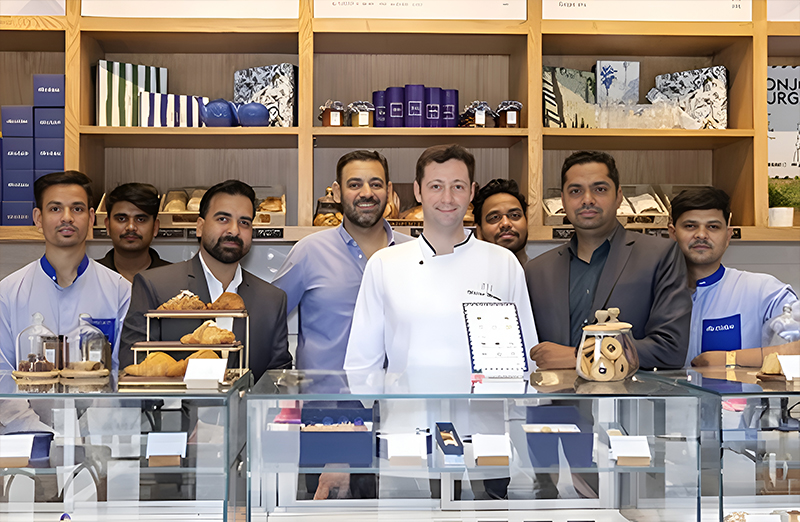
In general, having a local partner or local support is tremendously helpful. In my opinion, it accelerates the development of any project.
Having a deep understanding of the market through comprehensive research is also essential. Finally, everything takes time in India, so patience is a necessity.
As for the hospitality industry specifically, my advice is to stay true to your original concept and vision in order to preserve your brand over the long term.
It is also important to understand the high expectations of Indian customers so as not to become frustrated. You must recognize that India is not Europe and that the values, habits, and expectations are different here.
For more information on this portrait or on UJA contact olivia@uja.in