

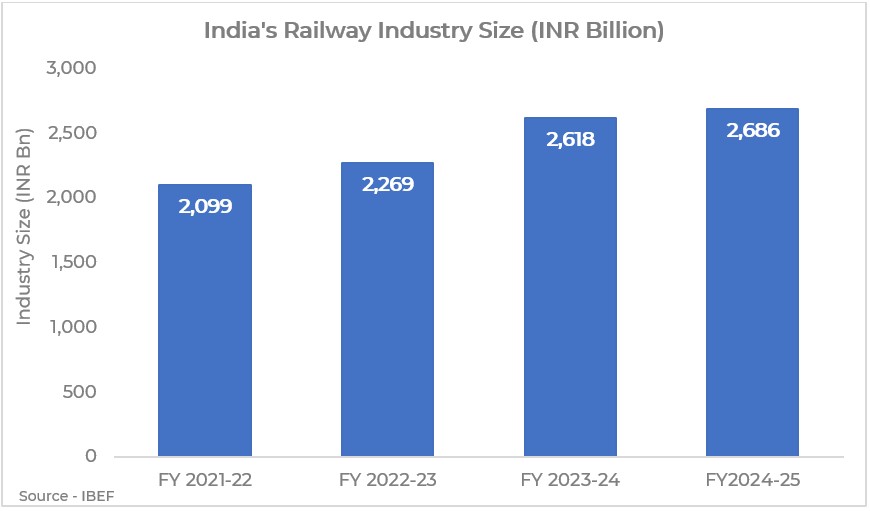
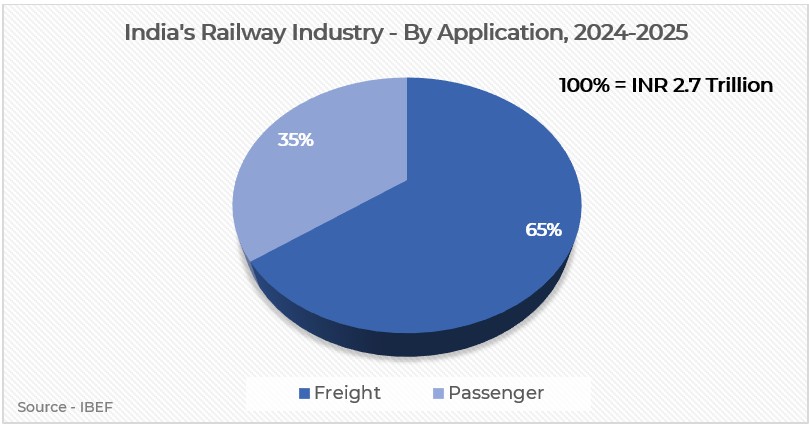
The Indian railway industry, the fourth largest globally, forms the backbone of the nation’s transportation and economic infrastructure. Spanning 69,181 km and over 8,000 stations, it facilitates extensive mobility, connectivity and trade. In FY 2023–24, Indian Railways reported gross traffic receipts of INR 2.7 trillion, a 6.4% annual increase as compared to FY 2022-23. Freight operations contributed 1.6 billion tons of cargo, while passenger services accounted with 7 billion passengers.
Currently, undergoing major modernization, the sector benefits from a record INR 2,652 billion capital outlay in FY 2024–25 for freight corridors, high-speed rail and station redevelopment. With 97% electrification and a Net Zero Carbon goal by 2030, initiatives such as Vande Bharat trains, Kavach safety systems and digitalization exemplify its progress. Employing over 1.2 million people, the industry continues to drive inclusive economic growth across India.
Amrit Bharat Station Scheme (ABSS)
Vande Bharat Mission – Indigenous High-Speed Trains
Dedicated Freight Corridor Development
Railway Electrification Program
Mumbai–Ahmedabad High Speed Rail Corridor (Mumbai–Ahmedabad HSR)
Digital Transformation and Passenger Services
Gati Shakti Multi-Modal Integration
Advanced Safety Systems and Technology Integration
Massive Infrastructure Expansion and Capital Investment
Strong Policy Support and Regulatory Framework
Technology Adoption and Innovation Ecosystem
Growing Domestic Market and Consumption Base